Unleash a Zestful Brand Identity with This Citrus Font
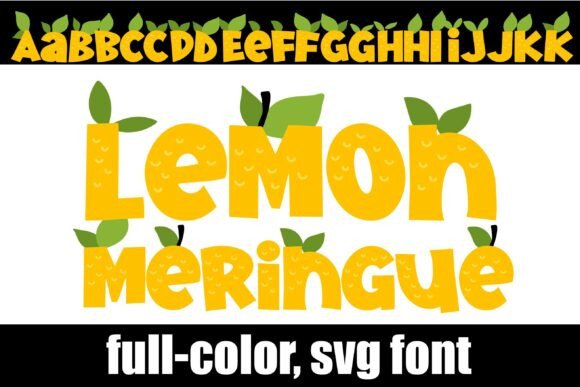
There is a specific kind of energy you want to capture when you are building a brand that feels approachable, fresh, and vibrant. You want your visuals to say, "Come in, we're friendly," before a customer even reads a single word. Too often, design assets feel sterile or overly corporate, stripping the personality out of small businesses that thrive on human connection. If you have ever scrolled through endless lists of sans serif or script fonts feeling like nothing quite captures that sunny, artisanal vibe you are aiming for, it might be time to look at something with a bit more texture. I recently spent some time working with Lemon Meringue, a full-color SVG font that doesn't just sit on the page—it practically jumps off it. It brings a tactile, three-dimensional quality to typography that standard monochrome fonts simply cannot achieve.
A Feast for the Eyes: The Visual Appeal of SVG Typography
Before diving into the practical applications, we need to talk about what makes Lemon Meringue a standout piece of design technology. This isn't your standard vector file where you simply change the hex code in your toolbar. As an SVG (Scalable Vector Graphic) font, it retains high-fidelity photographic details. In this case, the letterforms are designed with a realistic citrus-peel texture. We are talking about the actual dimples, pores, and gradients of a lemon rind, topped with hand-illustrated green leaves and stalks.
This creates a level of depth that flat design often misses. When you type "Fresh Juice," the letters look like they are made of actual fruit. For designers, this is a massive asset because it eliminates the need for complex layering or 3D rendering software to get that "organic" look. It is a premium font that offers immediate visual impact. However, because of this rich detail, it falls firmly into the category of a display font. It is meant for headlines, logos, and impactful call-outs, not for writing your next novel or a dense blog post.
Matching the Font to the Brand Narrative
Choosing the right typeface is less about what looks "cool" and more about what communicates the right message. Typography is the voice of your visual identity. A sharp, geometric sans serif font might scream "Tech Startup," while a delicate script font whispers "Luxury Wedding." Lemon Meringue shouts "Fresh, Natural, and Fun." If your brand identity relies on an organic-fresh soul, this typeface does a lot of heavy lifting for you.
Consider the psychology of your customer. If you are running a boutique juice bar, an independent farmer’s market stall, or a line of homemade cosmetics, your customers are looking for authenticity. They want to feel that your product is made with care and ingredients they can trust. The realistic texture of Lemon Meringue subconsciously reinforces that quality. It suggests that your brand is rooted in nature, much like the fruit itself. It is particularly effective for businesses that want to distance themselves from the industrial, "processed" look of big-box competitors.
Practical Applications: Where Does It Fit Best?
The versatility of a creative font like this lies in its ability to be the hero of a composition. Because the font carries so much visual weight, you don't need to clutter your design with other elements. Here are some specific scenarios where Lemon Meringue excels:
- Logo Design: For a summer-vibe digital header or a physical sign, this font creates an instant logo. It works beautifully for ice cream parlors, lemonade stands, or tropical-themed event planners. The built-in leaves act as natural ornaments, reducing the need for extra iconography.
- Packaging Design: If you are selling jams, sauces, or artisanal goods, shelf appeal is everything. Using this typeface on your labels immediately signals the flavor profile. It creates a visual shorthand that says "citrus" or "fruity" without needing to show a picture of the fruit.
- Social Media Graphics: On platforms like Instagram or Pinterest, where the feed moves fast, you have a split second to grab attention. A 3D, textured headline is far more likely to stop a thumb-scroll than a standard Arial or Helvetica title. It is perfect for "Recipe of the Day" posts or weekend sale announcements.
- Posters and Signage: Whether it is a temporary A-frame sign outside a cafe or a poster for a community fair, the bold, friendly letterforms ensure readability from a distance while maintaining a whimsical character.
Font Pairing: The Art of Balance
One of the most common mistakes I see in design is using two fonts that fight for attention. When you are working with a highly stylized display font like Lemon Meringue, the golden rule is simplicity. You need a supporting cast that knows when to step back.
Because Lemon Meringue is bold, textured, and irregular, your secondary font should be clean, geometric, and neutral. A simple sans serif font is almost always the best choice here. Think of fonts like Montserrat, Open Sans, or Lato for your body text, pricing, and fine print. If you try to pair it with a handwritten font or a complex serif font, the result will likely look chaotic and difficult to read. The goal is visual consistency; the headline grabs the eye, and the clean body copy delivers the information.
Technical Considerations and Readability
As a designer or business owner, you need to think about the technical execution of your assets. SVG fonts are powerful, but they behave differently than standard fonts. They are rasterized within the vector container, meaning they look crisp at their intended size but shouldn't be scaled up infinitely like a standard vector path might be.
Furthermore, readability is paramount. While Lemon Meringue is legible for short phrases, it is not designed for long sentences. If you try to write a paragraph in all-caps citrus texture, you will give your audience a headache. Use it strategically for the first three to five words of a headline. This ensures that the "sunny disposition" of the font enhances the user experience rather than hindering it.
Also, consider the background. A textured font needs breathing room. Place it on solid, contrasting backgrounds—whites, creams, or deep greens usually work best—to let the details of the peel and leaves pop. Avoid placing it over busy photographs, as the texture of the font will get lost in the noise of the image.
Commercial Licensing and Project Goals
Before you integrate any design asset into a commercial project, it is vital to understand the licensing. Most premium fonts, including high-quality display fonts like this, come with specific terms regarding how many devices can install the file or how many users can access it within a company. If you are using this for a client’s packaging design or a digital product you intend to sell, ensure your license covers commercial use. It is a small detail that protects your business and respects the work of the type designers who created these intricate assets.
Ultimately, the goal of any design asset is to solve a communication problem. If your problem is that your brand feels too generic, too cold, or too disconnected from the natural world, Lemon Meringue offers a distinct solution. It bridges the gap between digital precision and organic warmth. By applying this typeface thoughtfully to your headers, logos, and key marketing assets, you can squeeze every drop of potential out of your visual identity, leaving a lasting, zesty impression on your audience.