Halloween Bone: A Font with Eerie Elegance and Festive Spirit
There's a particular kind of magic in Halloween design—the thrill of balancing the spooky with the stylish, the macabre with the playful. Whether you're crafting invitations for a haunted gathering, designing merchandise for a seasonal pop-up, or creating social media content that stops the scroll, typography does more than deliver a message. It sets the entire mood. And when you're working within the Halloween aesthetic, a generic font simply won't cut it. You need something that feels like it belongs in a candlelit crypt or etched into a weathered tombstone, yet still reads cleanly across modern design applications.
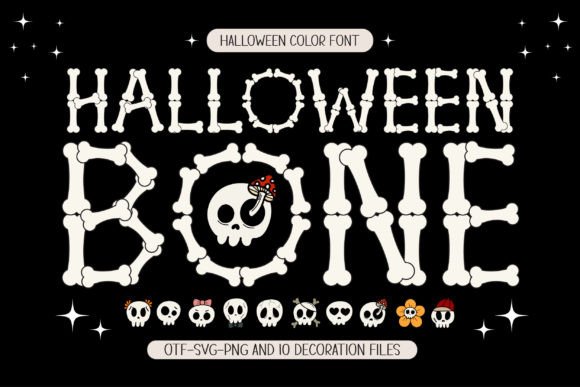
That's the space where Halloween Bone lives. This color font draws direct inspiration from the textures and forms of bones, giving each character a distinctly skeletal quality that immediately evokes the Halloween season. But what sets it apart from novelty fonts that sacrifice function for theme is its thoughtful design. The letterforms maintain enough structure and consistency to work in real-world projects, not just as a curiosity on a font specimen page. Paired with 10 matching skull clip arts included in the package, it offers a cohesive visual toolkit for anyone building Halloween-themed creative work.
A Typeface Built for the Season
Halloween Bone isn't trying to be an everyday font. It knows exactly what it is: a seasonal display typeface designed to channel the eerie elegance of Halloween. The bone-inspired construction gives each letter a tactile, almost fossilized quality. Imagine the look of dried, aged bone—cracked, textured, slightly irregular—and you'll start to picture how these characters appear on screen or in print. As a color font, it incorporates shading and tonal variation directly into the glyph design, which means the dimensional effect is baked in rather than requiring additional design layers or effects.
The 10 skull clip arts that accompany the font are a practical bonus. Rather than hunting for separate graphic elements that match your typography, you get illustrations designed to work alongside the letterforms. These clip arts are useful for breaking up text layouts, adding visual interest to posters, or creating standalone decorative accents on packaging and merchandise. For designers who value cohesion—where every element in a composition feels like it belongs together—this kind of bundled asset saves time and eliminates guesswork.
Where This Font Actually Works
The real test of any themed font is whether it holds up in practical applications. Halloween Bone is a display font, which means it's built for headlines, titles, and short bursts of text rather than body copy. Think of it as the typographic equivalent of a statement piece in an outfit—it draws the eye and sets the tone, but it needs supporting elements around it to create a complete look.
For poster design, this font is a natural fit. Event promoters, haunted house operators, and community organizers can use it for titles and key information on Halloween event flyers. The bone texture adds visual weight without relying on excessive effects or overlays, which keeps production straightforward whether you're printing digitally, offset, or screen printing.
In packaging design, Halloween Bone works well for seasonal product labels, candy wrappers, craft brewery seasonal releases, or bakery packaging for Halloween-themed treats. The font's personality communicates the theme instantly, which is exactly what you need when a customer is scanning a shelf or browsing an online store. Pair it with a clean sans serif for ingredient lists or product descriptions, and you get a layout that's both thematic and functional.
Social media graphics are another strong use case. Instagram posts, Facebook event covers, Pinterest pins, and TikTok overlays all benefit from typography that grabs attention in a crowded feed. Halloween Bone's distinctive look makes it stand out against the sea of generic seasonal content. Use it for announcement graphics, countdown posts, or themed quote images throughout October.
For small business branding during the Halloween season—think costume shops, pumpkin patches, escape rooms, or themed restaurants—this font can anchor a temporary seasonal identity. Swap it into your social headers, email banners, and in-store signage for the month, then revert to your standard brand fonts afterward. This kind of seasonal refresh keeps your brand feeling current and engaged with the calendar without requiring a full rebrand.
Merchandise and sublimation projects are where Halloween Bone really shines for crafters and small-scale producers. T-shirts, mugs, tote bags, stickers, and home décor items all benefit from a font that carries the Halloween aesthetic in its very construction. The color font format means the bone texture and shading come through in the final product, adding a layer of quality that flat, single-color fonts can't match.
Invitations, whether for Halloween parties, corporate events, or themed weddings, benefit from typography that signals the mood before a single word is read. Halloween Bone sets expectations immediately, which means your invitation design communicates the theme through its visual language alone.
Making It Work with Other Fonts
No display font exists in isolation. The strongest designs use font pairing to create hierarchy, contrast, and readability. Halloween Bone handles the heavy lifting for headlines and titles, but you'll need complementary typefaces for supporting text.
A clean sans serif font like a geometric or humanist sans works well for body copy, event details, and any text that needs to be read quickly. The simplicity of a sans serif provides visual breathing room against the texture-heavy display font. Alternatively, a serif font with moderate contrast can add a classic, editorial feel—useful if your Halloween project leans more toward sophisticated dinner party than haunted house.
A script font or handwritten font can work as a secondary accent for subheadings or callouts, but exercise restraint. Too many decorative fonts in one layout create visual noise. The general principle is one display font, one supporting text font, and optionally one accent font used sparingly.
Always test your pairings in context. Set them at the actual sizes they'll appear in your final design. A font combination that looks balanced at large scale might feel cluttered when reduced to a business card or mobile screen.
Readability and Practical Considerations
Themed fonts walk a fine line between personality and legibility. Halloween Bone leans into its bone-inspired aesthetic, which means some letterforms carry more visual complexity than a standard typeface. This is perfectly fine—and expected—for display use, but it does mean you should be thoughtful about application.
Use it at sizes where the texture and detail are visible and contribute to the design rather than becoming visual clutter. For very small text, particularly on screen, the bone texture may lose definition. In those cases, reserve Halloween Bone for the headline and set supporting information in a simpler typeface.
Color contrast matters too. Since this is a color font with built-in shading, the background you place it against will affect how the texture reads. Test it on dark backgrounds, light backgrounds, and photographic backgrounds to find the combinations that give you the best visibility and visual impact.
For web use, verify that color font rendering works across the browsers and devices your audience actually uses. Color font support has expanded significantly, but it's still worth testing rather than assuming universal compatibility.
Licensing and Commercial Use
If you're planning to use Halloween Bone in commercial projects—whether that's client work, products for sale, or marketing materials for your business—review the licensing terms before you begin. Most premium fonts come with specific licensing structures that cover different use cases: desktop use, web use, app embedding, and merchandise production may each carry separate terms or pricing tiers.
For crafters selling finished products like sublimation prints or custom apparel, confirm that the license covers physical goods production. For designers working with clients, understand whether the license allows you to deliver the font files to your client or if the client needs their own license. These details vary between font foundries and distributors, so reading the fine print upfront prevents complications later.
Building a Halloween Visual Identity
What makes a Halloween project feel polished rather than amateurish isn't any single element—it's consistency. When your typography, color palette, imagery, and layout style all point in the same direction, the result feels intentional. Halloween Bone, with its integrated skull clip arts and cohesive bone-inspired aesthetic, gives you a head start on that consistency. You're not assembling a Halloween look from mismatched pieces; you're building on a unified visual foundation.
Whether you're a designer assembling a client's seasonal campaign, a small business owner refreshing your October marketing, or a crafter building a product line, the right design assets make the difference between work that feels thrown together and work that feels considered. A creative font like Halloween Bone isn't just decorative—it's a functional tool that communicates theme, sets mood, and anchors your visual identity for the season.
Take the time to explore how it fits your specific project. Test it against your brand colors. Try it in your layout at different sizes. Pair it with your existing typefaces. The goal isn't to use a Halloween font because it's October—it's to use the right font because it makes your work more effective, more engaging, and more visually compelling for the audience you're trying to reach.