Benjamin Franklin: A Font Duo for Timeless Design
There’s something deeply compelling about old-world typography—the kind you see in antique books, historical documents, and illuminated manuscripts. It carries a sense of weight, authority, and elegance that modern fonts often struggle to replicate. If you’ve ever wanted to bring that kind of timeless sophistication into your own projects, the Benjamin Franklin font family paired with the XVI Century Shaw Woodcuts offers a compelling solution. This combination isn’t just about aesthetics; it’s a practical tool for designers, creators, and business owners looking to add depth and character to their visual communication.
Understanding the Visual Character of Benjamin Franklin
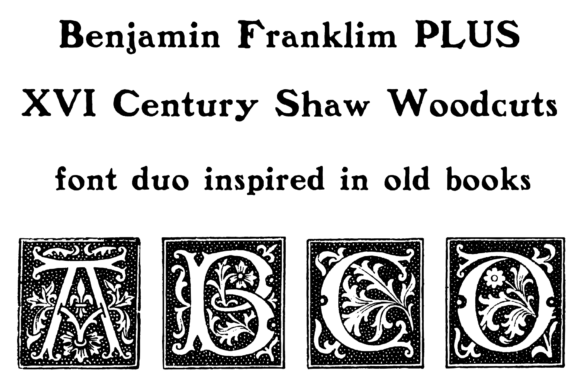
At its core, Benjamin Franklin is a serif font designed to evoke the feel of old book typography. Its letterforms are inspired by historical printing styles, with slightly uneven edges and a textured appearance that mimics the look of aged ink on parchment. This isn’t a sterile, overly polished typeface—it has personality. The subtle irregularities give it warmth and authenticity, making it ideal for projects that aim to feel established, literary, or rooted in tradition.
When paired with XVI Century Shaw Woodcuts, a display font featuring ornate Tuscan initials and woodcut-style embellishments, the effect is striking. The woodcuts font is designed for headers and initials, adding a decorative flourish reminiscent of medieval manuscripts. Together, they create a cohesive visual language that works beautifully for designs seeking an old-world, artisanal quality.
Where This Font Duo Shines: Practical Applications
This combination isn’t just for designers working on historical recreations. Its versatility makes it suitable for a wide range of modern creative and commercial projects. Here’s how you might use it:
- Brand Identity & Logo Design: For businesses in niches like artisanal goods, bookshops, heritage brands, or specialty coffee roasters, this font duo can help establish a brand personality that feels authentic and grounded. A logo set in Benjamin Franklin communicates craftsmanship and history.
- Packaging Design: Think of labels for small-batch foods, craft beverages, or boutique products. The textured, historical quality of the font adds a tactile feel to packaging, suggesting care and tradition in the product itself.
- Editorial & Print Layouts: Use it for book covers, chapter headings, or magazine features—especially for genres like historical fiction, poetry collections, or lifestyle publications that want a touch of classic elegance.
- Invitations & Stationery: Wedding invitations, event programs, or high-end stationery benefit from the font’s sophisticated yet approachable style. The woodcut initials make beautiful monograms or decorative elements.
- Digital & Social Media Graphics: While it’s a display font, Benjamin Franklin works surprisingly well for headers on websites, blog post titles, or quote graphics on social media. It helps content stand out with a distinctive voice.
- Merchandise & Posters: T-shirts, posters, or art prints with a vintage or literary theme can leverage this font to create designs that feel curated and meaningful.
Improving Design Consistency and Audience Connection
Typography is one of the most powerful tools for building visual consistency. When you use a font like Benjamin Franklin across multiple touchpoints—from your website headers to your social media graphics to your printed materials—you create a unified brand experience. This consistency helps with brand recognition; people start to associate that specific typographic style with your business or creative project.
Readability is also key. While Benjamin Franklin is a display font, its letterforms are clear enough for short to medium-length text, especially at larger sizes. For body text, you’d want to pair it with a simpler sans serif font or a clean serif, but for headlines and pull quotes, it’s highly legible. The key is to use it intentionally—where it will make the most impact without sacrificing clarity.
Making the Most of This Font Pairing
If you’re considering using this font duo, here are a few practical tips:
- Match the Font to Your Project’s Tone: Benjamin Franklin works best for projects that benefit from a historical, literary, or artisanal feel. It might not be the right fit for a tech startup or a minimalist skincare brand, but it’s perfect for a whiskey label, a bookstore, or a history blog.
- Test Pairings with Neutral Fonts: Since Benjamin Franklin has a strong personality, balance it with a more neutral typeface for body text. A simple sans serif like Lato or Open Sans can provide contrast without competing for attention.
- Explore the Included Styles: The font family typically includes multiple weights or styles. Test them to see which works best for your specific application—whether it’s a bold header, a subtle subtitle, or a decorative initial.
- Consider Readability in Context: Always preview your design at the size it will be viewed. A font that looks great on your screen might be harder to read on a mobile device or from a distance on a poster.
- Check the Licensing: If you’re using the font for commercial projects—like client work, merchandise, or paid digital products—make sure you have the appropriate commercial font license. Many premium fonts require an extended license for certain uses.
Final Thoughts on Choosing Characterful Typography
In a world saturated with generic design, choosing a font with character can make a real difference. The Benjamin Franklin and XVI Century Shaw Woodcuts duo offers a way to inject history, warmth, and sophistication into your projects. It’s not just about looking different—it’s about communicating a specific feeling and connecting with an audience that appreciates detail and craftsmanship.
Whether you’re designing a brand identity, creating content for a blog, or working on packaging for a small business, this font pairing provides a versatile and visually rich starting point. The key is to use it thoughtfully, pairing it with complementary design elements, and always keeping your audience and project goals in mind. Typography is, after all, one of the most direct ways to speak to your audience before they even read a word.